AK+Dr. Abed KhabbazDENTAL CLINIC · HAMRA, BEIRUTالعربية
Book nowCallWhatsApp
ORAL SURGERY · HAMRA, BEIRUT

Wisdom Tooth Extraction in Beirut

A wisdom tooth should not be removed simply because it exists. The decision depends on symptoms, disease risk, position, access for cleaning and its relationship to nearby teeth and anatomical structures.

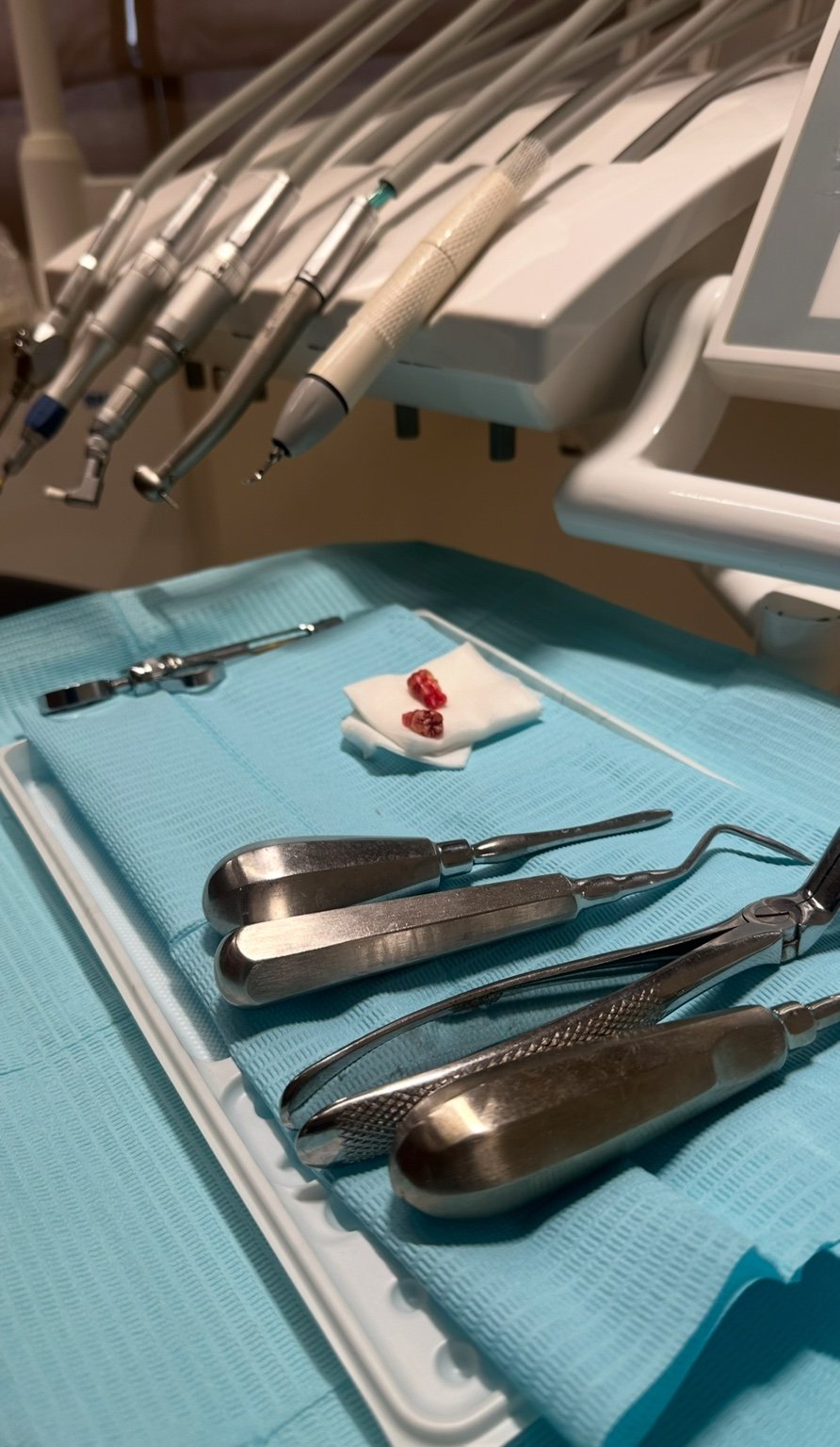
Dental extraction instruments and extracted wisdom teeth on a clinical tray

Why wisdom teeth may need removal

Common reasons include recurrent infection around a partially erupted tooth, decay that cannot be predictably restored, damage to the adjacent tooth, cystic change, or pain clearly related to the tooth.

Planning the extraction

Clinical examination and radiographs help assess eruption, root shape, surrounding bone and proximity to important structures. More complex cases may need three-dimensional imaging or referral to an oral surgeon.

Aftercare is part of the procedure

Post-extraction instructions focus on protecting the blood clot, controlling swelling and discomfort, maintaining hygiene and identifying signs that need review.

COMMON QUESTIONS

Frequently asked questions

Do all wisdom teeth need to be removed?

No. Asymptomatic wisdom teeth without disease may sometimes be monitored. The decision should be individualized.

How long does swelling last?

Swelling often increases during the first two to three days and then gradually improves, although the pattern varies with surgical difficulty and the individual.

When should I contact the clinic after an extraction?

Contact the clinic urgently for persistent bleeding, worsening swelling, fever, or severe or increasing pain. Difficulty breathing or swallowing, major swelling in the mouth, or eye swelling with vision changes requires immediate emergency medical assessment. Do not wait for a WhatsApp reply.

This page is general educational information and does not replace an examination, diagnosis or individualized treatment plan.